Exclusive: Composite Recycling and the industrial alliance finally making boating circular


· 5 min read
Boating has surged in popularity in recent years, with analysts projecting a compound annual growth rate (CAGR) of around 7% through 2030¹. However, as the industry grows, so does its environmental footprint.
The challenge isn't in operational efficiency, but in boat structural materials—until now, they’ve been considered non-recyclable waste.
To delve further, roughly 70% of boats are made of composite material², a lightweight yet resilient blend of fibers and resin known for its superior strength and durability. While these properties have made composites the material of choice in boat manufacturing, they also pose a significant environmental challenge. Unlike metals or pure glass, composites cannot be easily recycled, leading most to end up in landfills or incinerators, where they release toxic fumes and contribute to environmental degradation.
Until recently, no solution existed that could separate the materials in a way that made recycling cost-effective. As a result, composite materials, which have been in use since the 1970s, have been largely discarded as waste with no way to reuse them effectively.
Despite these challenges, there is finally a promising way forward. The latest innovations in recycling technologies are making composite –and thus boat structure– recycling economically viable.
Underscoring the dual momentum of technical innovation and commercial adoption, the Paris Nautic Show (one of Europe’s leading industry fairs) just awarded its Special Innovation Sustainable Transition Prize (Prix Innovation Transition Écologique) to a pioneering industrial coalition at the center of the revolution.
The industrial alliance is composed of key players across the entire value chain (alphabetically):
• Composite Recycling (recycling step), the technology pioneer in industrial composite-waste recycling.
• Groupe Arkema (re-integration), a major producer of advanced specialty materials.
• Groupe Beneteau (boat production), the world’s largest builder of sailing yachts and motorboats.
• Groupe Chomarat (re-utilization), a pioneer in high-performance technical textiles for composite reinforcement.
• Owens Corning (re-utilization), the world's largest manufacturer of fiberglass composites.
• Veolia (waste management), the world’s largest environmental service company.
Composite Recycling, is a Swiss cleantech startup that has developed a low-temperature thermolysis technology. Its patented process allows for the recovery of high-quality fibers and the conversion of resin matrices into reusable feedstocks. It can thus recover and reuse fibers from glass and carbon fiber-reinforced plastics (FRP) that would otherwise end up in landfills. Their reclaimed fibers can be used in the production of new, high-performance composites, making the process both sustainable and economically viable in the boating industry.
Further, the potential for disruption extends beyond the boating industry. Sectors such as automotive, aviation, and renewable energy could also be transformed, both ecologically and economically, by leveraging the same technology for “recycling at scale”. Building on the outstanding results from its R&D and the initial commercialization phases, Composite Recycling is set to announce a new fundraising round that will further accelerate its growth. Recently, the company made headlines with the appointment of Smaranda Jaun, as its new CEO, bringing a wealth of experience from investment banking, venture capital, and growth advisory. This leadership transition underscores the firm's ambition as it scales operations to meet the rapidly growing demand for circular solutions in the composite materials sector.

Smaranda Jaun (CEO, Composite Recycling), Martial Gabillard (Director, Veolia France), Peggy Codreanu (Director, Veolia France), Marie Glorennec (Project Manager, Veolia France), Steve Monnet (CTO, Composite Recycling) officially formalizing their partnership
Following Composite Recycling’s process,
• The recovered glass fibers are respun by Owens Corning into longer, industrially usable ones
• These are subsequently used by Chomarat to produce fiberglass reinforced composite materials
•Further, Composite Recycling’s extracted thermolysis oil is reconverted by Arkema into new batches of resin, perfectly closing the loop.
At the end of this process, Groupe Beneteau utilizes the renewed composites and glass fibers directly in their boat production — vessels crafted not from virgin materials, but from returned materials, re-emerging to meet the sea.
As part of the process, Veolia manages the transportation and handling of scraps and components, collecting composite off-cuts and transporting them to Composite Recycling.
And these aren’t just good intentions. Already today Beneteau’s brand new Jeanneau Sun Fast 30 One Design and Beneteau's Oceanis Yacht 60 are made of materials from this cycle, proving that circularity in boat building is not just a concept, but already a reality. One of the most promising revolutions in recycling a “hard-to-abate” industry has just taken place—quietly, decisively and with consequences that extend far beyond the docks of Western Europe.

Beneteau’s brand new Jeanneau Sun Fast 30 One Design, made of recycled materials
Smaranda Jaun, CEO of Composite Recycling, commented when asked by illuminem: “We have just reached a major milestone in recycling. Composite Recycling has the technology to decarbonize at scale. This is only the beginning.” The firm’s Co-Founder and Growth Officer, Pascal Gallo, added: “This alliance provides the right platform for a global expansion of technology the world desperately needed.”
Veolia’s Director of Strategy, Innovation, and Materials Development, Peggy Codreanu commented: "Today marks a decisive step in our mission. This partnership will finally enable us to close the loop: transforming complex materials, long considered non-recyclable, into new resources.” Martial Gabillard, Veolia's Director for Waste Recovery, added: "This is a pioneering initiative. The members of the Show's Jury were not mistaken in awarding the Alliance the Sustainable Transition Prize."
Chomarat's Director of Commercial Strategy, Vincent Cholvy, also shared an exceptionally optimistic message: "This demonstrates how recycled fibers can now be seamlessly reintegrated into high-quality materials, advancing industries toward complete circularity". "Eco-design is at the heart of our strategy. To further advance the Circular Alliance initiative, we are committing to ISCC+ certification, ensuring the traceability and sustainability of recycled or bio-based raw materials throughout the manufacturing cycle."
So, how does the future of boating look? The technology showcased –and awarded– at the Paris Naval Show offered a clearer answer: boating can truly become sustainable, by being circular.
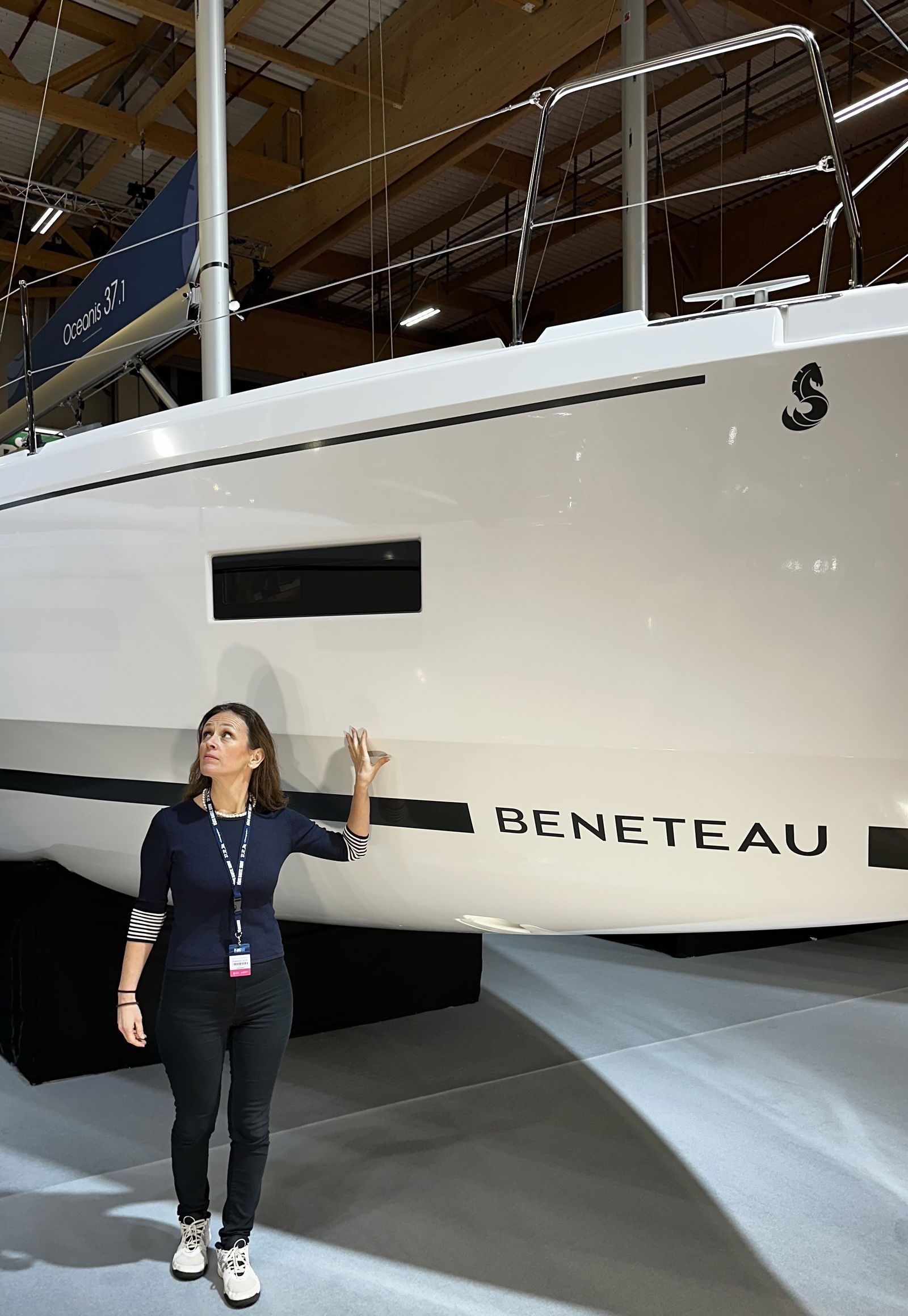
Composite Recycling’s newly appointed CEO Smaranda Jaun next to a new BENETEAU boat

Composite Recycling's mobile thermolysis unit enabling near-demand recycling capabilities

Imran Shaikh

Cities · Energy Management & Efficiency
illuminem
Construction Tech · Green Tech

Andrés Jonathan Guízar Dena

Construction Tech · Building Materials

Interesting Engineering

Construction Tech · Carbon

Mashable

Carbon Removal · Green Tech

Mint

Carbon · Carbon Regulations