This is how AI will accelerate the energy transition


· 5 min read
The new IPCC report is unequivocal: more action is urgently needed to avert catastrophic long-term climate impacts. With fossil fuels still supplying more than 80% of global energy, the energy sector needs to be at the heart of this action.
Fortunately, the energy system is already in transition: renewable energy generation is growing rapidly, driven by falling costs and growing investor interest. But the scale and cost of decarbonising the global energy system remain gigantic, and time is running out.
To-date, most of the energy sector’s transition efforts have focused on hardware: new low-carbon infrastructure that will replace legacy carbon-intensive systems. Relatively little effort and investment has focused on another critical tool for the transition: next-generation digital technologies, in particular artificial intelligence (AI). These powerful technologies can be adopted more quickly at larger scales than new hardware solutions, and can become an essential enabler for the energy transition.
Three key trends are driving AI’s potential to accelerate energy transition:
1. Energy-intensive sectors including power, transport, heavy industry and buildings are at the beginning of historic decarbonisation processes, driven by growing government and consumer demand for rapid reductions in CO2 emissions. The scale of these transitions is huge: BloombergNEF estimates that in the energy sector alone, achieving net-zero emissions will require between $92 trillion and $173 trillion of infrastructure investments by 2050. Even small gains in flexibility, efficiency or capacity in clean energy and low-carbon industry can therefore lead to trillions in value and savings.
2. As electricity supplies more sectors and applications, the power sector is becoming the core pillar of the global energy supply. Ramping up renewable energy deployment to decarbonize the globally expanding power sector will mean more power is supplied by intermittent sources (such as solar and wind), creating new demand for forecasting, coordination, and flexible consumption to ensure that power grids can be operated safely and reliably.
3. The transition to low-carbon energy systems is driving the rapid growth of distributed power generation, distributed storage and advanced demand-response capabilities, which need to be orchestrated and integrated through more networked, transactional power grids.
Navigating these trends presents huge strategic and operational challenges to the energy system and to energy-intensive industries. This is where AI comes in: by creating an intelligent coordination layer across the generation, transmission and use of energy, AI can help energy-system stakeholders identify patterns and insights in data, learn from experience and improve system performance over time, and predict and model possible outcomes of complex, multivariate situations.
AI is already proving its value to the energy transition in multiple domains, driving measurable improvements in renewable energy forecasting, grid operations and optimization, coordination of distributed energy assets and demand-side management, and materials innovation and discovery. But while AI’s application in the energy sector has proven promising so far, innovation and adoption remain limited. That presents a tremendous opportunity to accelerate transition towards the zero-emission, highly efficient and interconnected energy system we need tomorrow.
AI holds far greater potential to accelerate the global energy transition, but it will only be realized if there is greater AI innovation, adoption and collaboration across the industry. That is why the World Economic Forum has today released Harnessing AI to Accelerate the Energy Transition, a new report aimed at defining and catalysing the actions that are needed.
The report, written in collaboration with BloombergNEF and Dena, establishes nine 'AI for the energy transition principles' aimed at the energy industry, technology developers and policy-makers. If adopted, these principles would accelerate the uptake of AI solutions that serve the energy transition by creating a common understanding of what is needed to unlock AI’s potential and how to safely and responsibly adopt AI in the energy sector.
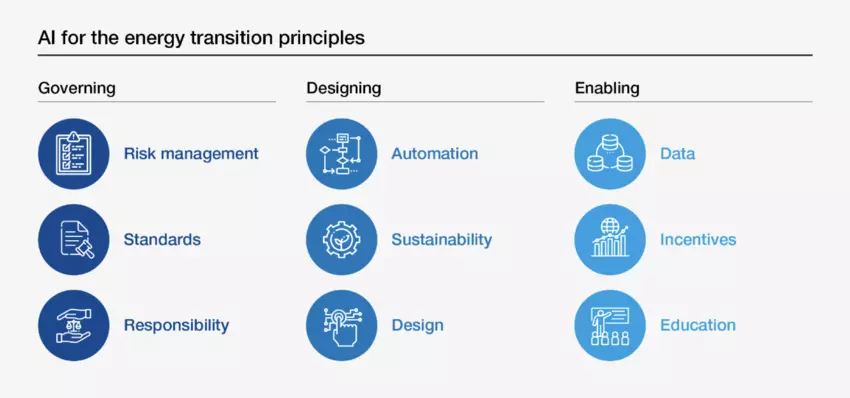
The principles define the actions that are needed to unlock AI’s potential in the energy sector across three critical domains:
AI is not a silver bullet, and no technology can replace aggressive political and corporate commitments to reducing emissions. But given the urgency, scale, and complexity of the global energy transition, we can’t afford to leave any tools in the toolbox. Used well, AI will accelerate the energy transition while expanding access to energy services, encouraging innovation, and ensuring a safe, resilient, and affordable clean energy system. It is time for industry players and policy makers to lay the foundations for this AI-enabled energy future, and to build a trusted and collaborative ecosystem around AI for the energy transition.
This article was co-authored by Espen Mehlum, Mark Caine and Dominique Hischier.
This article is also published by the World Economic Forum. Energy Voices is a democratic space presenting the thoughts and opinions of leading Energy & Sustainability writers, their opinions do not necessarily represent those of illuminem.

illuminem briefings

Oil & Gas · Energy
illuminem briefings

Oil & Gas · Energy
illuminem briefings

Nuclear · Power & Utilities

Financial Times

Power & Utilities · Energy

BGR

Solar · Renewables

The Guardian

Nuclear · Public Governance