A simple guide to Low-Carbon Concrete


· 4 min read
With embodied carbon being a key discussion point in construction recently, demand for low carbon building materials is increasing. Concrete gets a bad rep in these discussions due to the high emissions associated with it. However, it’s difficult to imagine a world where concrete is not used at all, and therefore the industry has made significant investments to develop lower-carbon concretes.
But what is low carbon concrete and how can it be adopted at scale to help the industry remain within planetary boundaries?
In its simplest form, concrete is a mixture of paste and aggregates, or rocks. The paste, composed of cement and water, coats the surface of the fine (small) and coarse (larger) aggregates. Through a chemical reaction called hydration, the paste hardens and gains strength to form the rock-like mass known as concrete.
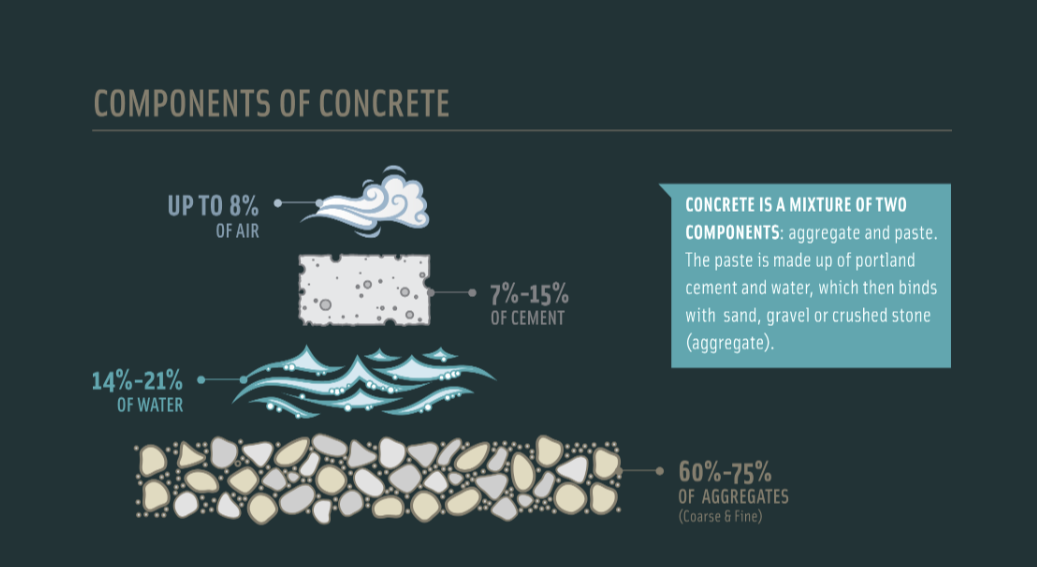
One reason why the carbon emissions are so high is because cement has to be heated to very high temperatures in order for clinker to form. A major culprit of this is alite (Ca3SiO5), a mineral in concrete that cures within hours of pouring and is therefore responsible for much of its initial strength.
Low carbon concrete is concrete produced with a lower carbon footprint than traditional content. Other than a reduced carbon footprint, low carbon concrete should behave identically to its high carbon counterpart.
To create low carbon concrete, producers can implement a series of relatively low-impact changes to their production processes and mix designs.
To create low carbon concrete, producers can implement a series of relatively low-impact changes to their production processes and mix designs.
There are 3 ways by which concrete manufacturers can reduce the carbon emissions related to their products:
Depending on the fuel used and the dosage of the additions, the carbon footprint of concrete can be reduced by up to nearly 70%.
In short, no.
While there’s been amazing progress in lowering carbon’s footprint, the industry still has big challenges.
Here’s some things to note around the technologies which limit their scalability today:
Future Thought Leaders is a democratic space presenting the thoughts and opinions of rising Energy & Sustainability writers, their opinions do not necessarily represent those of illuminem. This article is also published on 2050 Materials.

illuminem briefings

Corporate Governance · Net Zero
illuminem briefings

Effects · Climate Change
illuminem briefings

Corporate Sustainability · Carbon

The Straits Times

Public Governance · Climate Change

CNN

Effects · Climate Change

CGTN

Carbon · Carbon Capture & Storage